
Corporate technology training for teams and companies
Fteam develops customized training for companies that need to build team capability, deepen technical knowledge and prepare professionals for new projects and challenges.
The content combines fundamentals, practice and experiences applied to real development contexts.
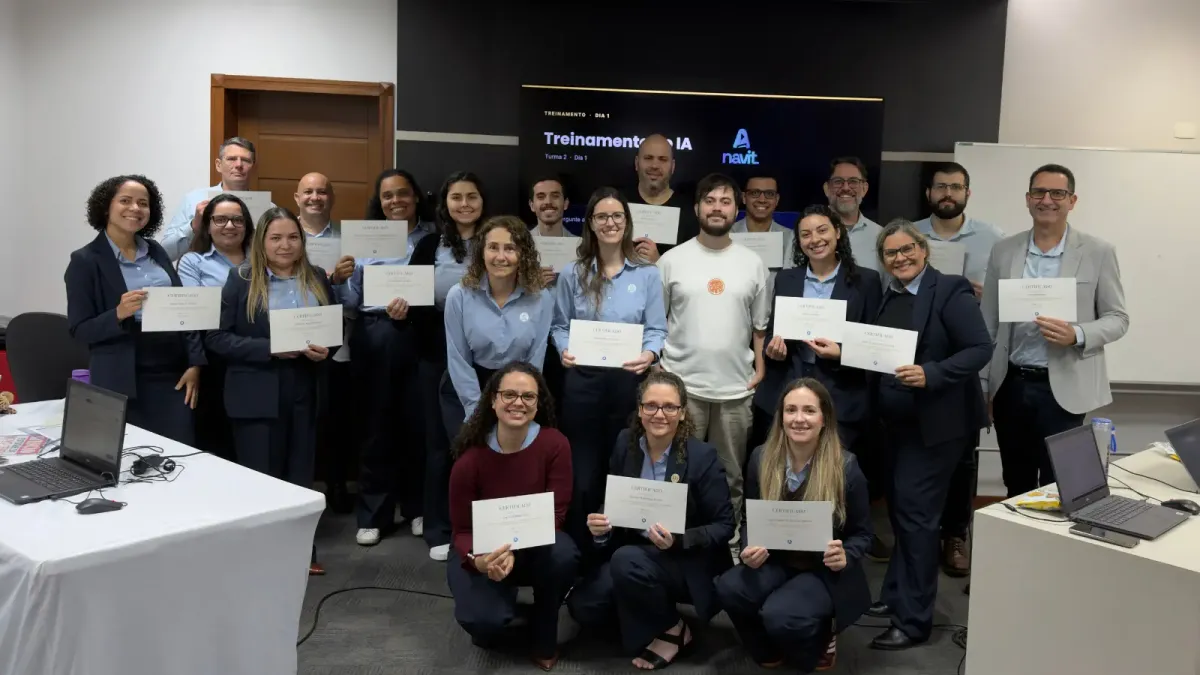
What is a corporate technology training?
A corporate technology training is a structured capability-building program designed to meet the technical needs of a specific company, team or project.
Unlike generic courses, the content can take into account the participants’ level, the technologies used, current challenges and the organization’s objectives.
Corporate technology training builds team capability with content adapted to the company’s reality, technical level and challenges.
When should a technology team be trained?
Training can be important when a company is adopting a new technology, building a team, or facing recurring difficulties during development.
- The team needs to learn a new technology
- The company has started a technical migration
- There are knowledge gaps between professionals
- The team needs to improve standards and practices
- A new project requires specific skills
- The company wants to reduce dependency on a few specialists
- Developers need to deepen their knowledge
- Technical leaders want to align decisions
- There are difficulties with architecture, performance or quality
- The team needs to apply knowledge to real problems
Content adapted to the company’s context
Each team has a different level of experience, structure and challenges. Because of this, training can be adapted to the participants’ knowledge, the technologies used, the company’s objectives, the project stage, available time, delivery format, required depth and the team’s real examples.
The goal is not just to present content, but to make the knowledge applicable to participants’ daily work.
Which topics can be covered?
The topics below are possibilities and can be combined according to the company’s context.
Flutter and Dart
Fundamentals, architecture, state management, interfaces, performance, testing and best practices.
Mobile development
App structuring, technical decisions, experience, publishing and continuity.
Software architecture
System organization, patterns, scalability and maintenance.
Quality and testing
Validation strategies, automated testing, technical review and problem prevention.
UX/UI for technology teams
Integration between design and development, components and screen states.
Performance
Identifying bottlenecks and practices to improve stability and experience.
Development best practices
Code organization, readability, documentation, collaboration and technical continuity.
Technical leadership
Decisions, communication, follow-up, standards and team development.
Flutter training for companies
Flutter is part of Fteam’s history and is one of the main areas of training offered to teams. Training can serve beginners, developers migrating to Flutter, or teams already using Flutter who need to deepen specific practices.
- Introduction to Flutter and Dart
- Interface development
- State management
- Application architecture
- Integrations
- Performance
- Testing
- Publishing
- Evolving existing projects
- Best practices for corporate environments
How does a corporate training work?
The process is structured to align needs, technical level, content, application and next steps.
- 01
Understanding the need
We get to know the team, the technical context, the project and the training objectives.
- 02
Level assessment
We identify current knowledge and the main points to develop.
- 03
Content structuring
We define topics, depth, hours, activities and format.
- 04
Delivery
We conduct theoretical and practical sessions, in person or remote.
- 05
Application
Participants work through exercises, examples and related situations.
- 06
Wrap-up and direction
We consolidate learnings and guide next steps.
Which formats are available?
Formats can vary depending on the objective, number of participants, location and expected level of interaction.
Available formats should be confirmed based on Fteam’s current operation.
In-company training
Training exclusive to the company’s team.
Workshop
A session focused on a specific topic or practice.
Modular program
Content distributed across different sessions.
Remote training
Training via videoconference with interaction and activities.
In-person training
Sessions held at the company or at a defined location.
Technical mentoring
Guided follow-up for professionals, teams or leaders.
Technical content applied to real challenges
Training becomes more relevant when participants can relate the content to the challenges they face day to day.
Fteam’s approach connects technical knowledge to the reality of the participating projects and teams.
- Project examples
- Hands-on exercises
- Analysis of real situations
- Code review
- Architecture discussion
- Resolving the team’s questions
- Activities related to the company’s context
What results can a training support?
Training should build practical capability, distribute knowledge and improve the quality of technical decisions.
More distributed knowledge
Reduces knowledge concentration in a few people.
Greater autonomy
Professionals make decisions with more confidence.
Standardized practices
Helps align architecture, code and processes.
Better team integration
Creates shared concepts and references.
Reduced rework
More consistent decisions reduce avoidable errors.
Preparation for new projects
Builds skills before or during technology adoption.
Leadership development
Leaders gain the knowledge base to guide and develop professionals.
Who can participate?
The mix of participants should be considered when defining the level and format of the training.
When profiles differ significantly, specific tracks or groups can be created.
- Junior developers
- Experienced developers
- Mobile teams
- Web teams
- Software architects
- Technical leaders
- Technology managers
- Quality professionals
- Designers and developers
- Cross-functional teams
What is the difference between training and consulting?
Training builds knowledge and skills within the team. Consulting analyzes a project, system or technical decision and presents recommendations for a specific scenario.
In some projects, Fteam may first analyze the scenario and then structure training related to the points identified.
Training builds the team’s capability. Consulting analyzes a specific technology or decision.
Frequently asked questions
Can the training be customized?
Yes. Content, depth, hours and activities can be adapted.
Does Fteam offer Flutter training?
Yes. Flutter is one of Fteam’s main technical specialties.
Can the training be held remotely?
Yes. It can be remote, in person or hybrid, depending on the format defined.
Is it possible to train a team with different skill levels?
Yes. The content can be structured into modules, tracks or groups.
Does the training include hands-on activities?
It can, depending on the topic, hours and objectives.
Does Fteam provide a certificate?
This possibility should be confirmed based on the format contracted.
How many people can participate?
The number depends on the format, dynamics and level of interaction.
Is it possible to use the company’s real challenges?
Yes, as long as scope, access and confidentiality are defined.
Can Fteam follow up with the team afterward?
Yes. Continuity can happen through mentoring, consulting, outsourcing or technical follow-up.
Training connected to your team’s challenges.
Tell Fteam which knowledge, technologies or skills your company needs to develop. Our team can help structure training suited to the participants’ level and the organization’s objectives.