
A complete process for building technology with more clarity, consistency and continuity.
Six stages that help turn real needs into systems, applications and tools ready to work, grow and keep evolving.
Technology doesn't start with code.
Before developing, it is necessary to understand the business, the operation, the users and the problem that needs to be solved.
The CUBO Methodology was created to organize these decisions, connect different areas of expertise and reduce risk throughout the project.
- More clarity about what will be built
- Technical decisions connected to the business
- Less rework during development
- Close collaboration between teams
- Greater predictability in deliveries
- A foundation ready to evolve
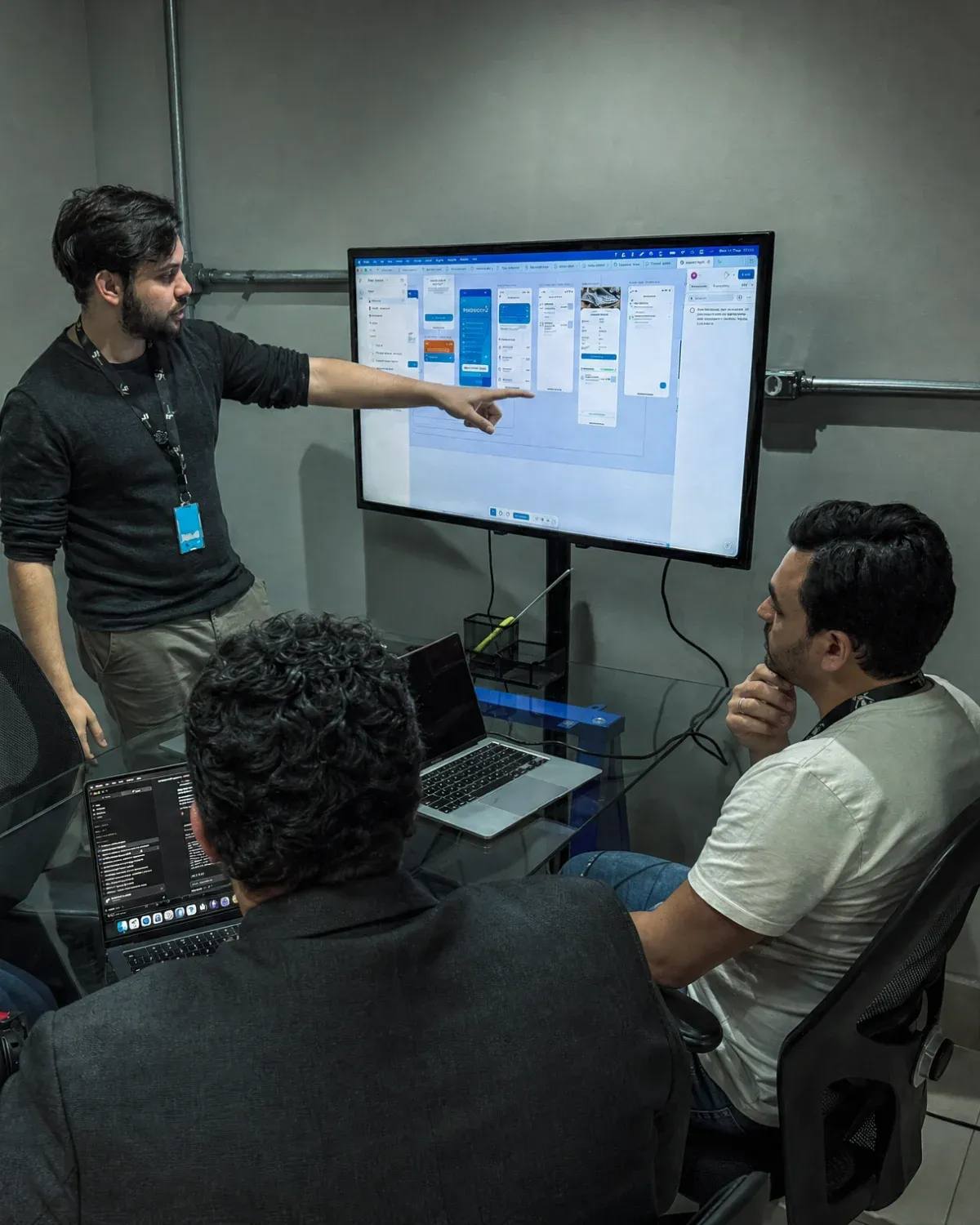
Six stages. One integrated build.
Each side of the CUBO represents an essential dimension of the project. The stages connect and guide the work from initial understanding through to deployment, support and the evolution of the technology.
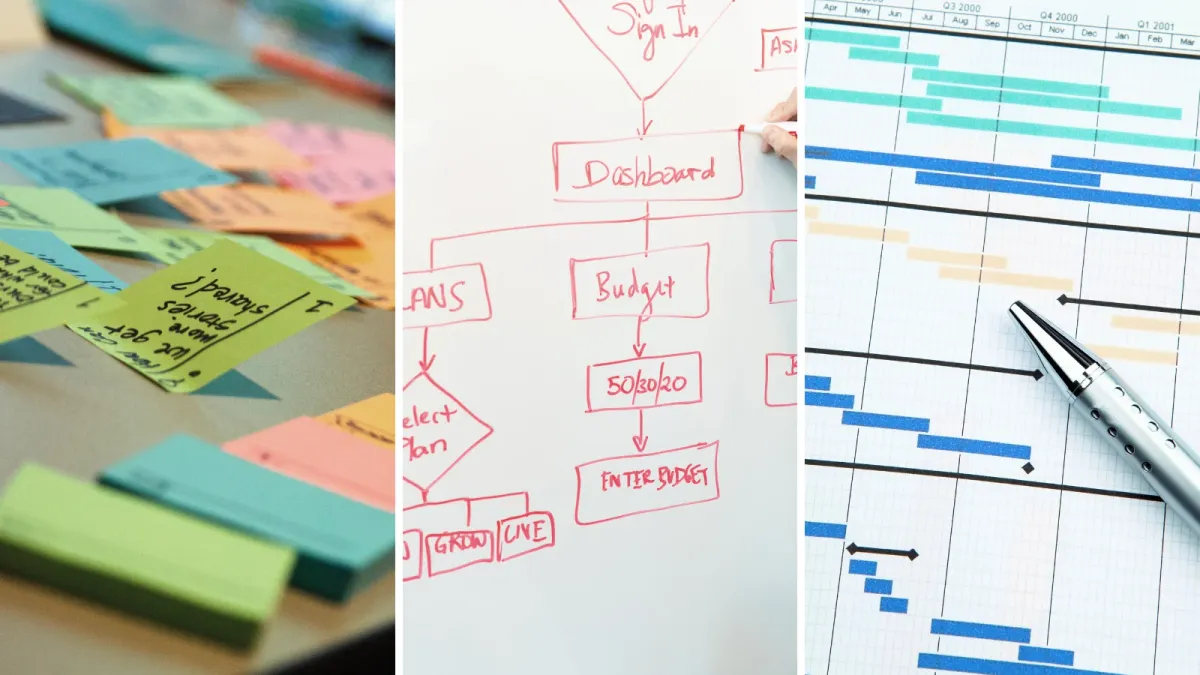
Understand before building.
01. Planning and Structuring
At this stage, we deepen our understanding of the company's context, operation, users and the challenge to be addressed. We organize needs, priorities, requirements and constraints to create a clear vision of the project and guide the decisions that follow.
O que fazemos
- Understanding the business and the operation
- Identifying users and needs
- Requirements gathering
- Mapping processes and flows
- Prioritizing features
- Initial structuring of the project
Principais entregas
- Structured vision of the project
- Initial scope and priorities
- Flow mapping
- Direction for the next stages
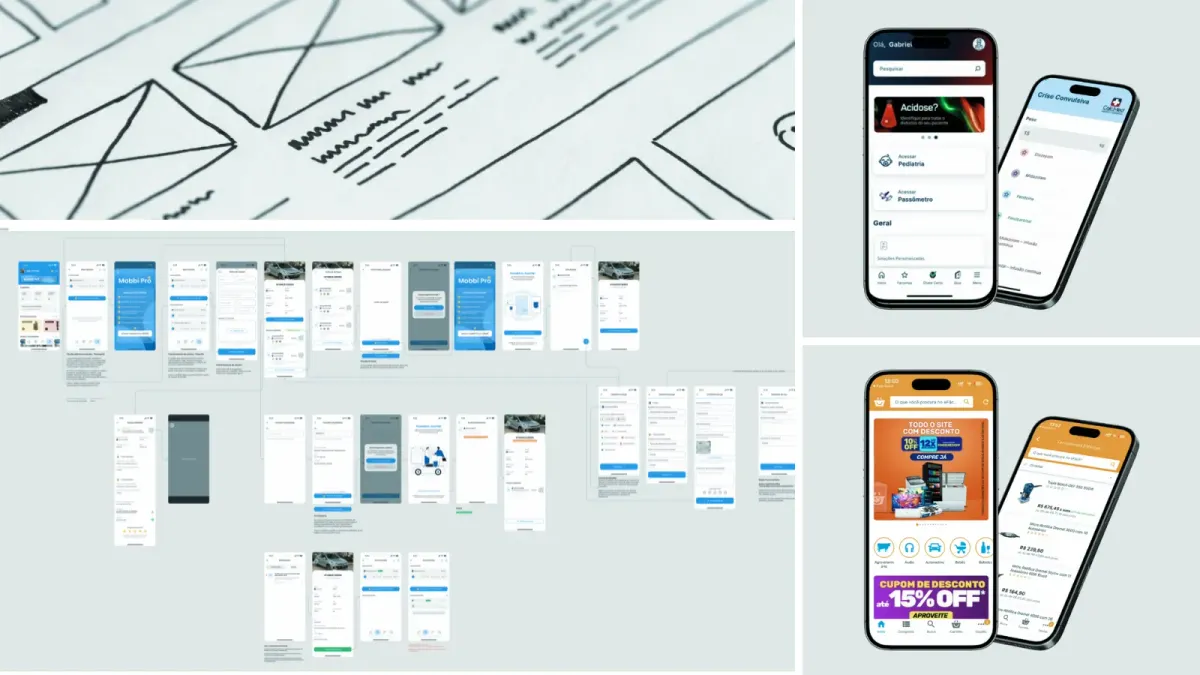
Turn processes into clear experiences.
02. UX/UI
We structure journeys, flows and interfaces around the people who will use the technology and the context in which it will operate. The goal is to make tasks simpler, reduce usability friction and connect the experience to the company's processes.
O que fazemos
- Journeys and navigation flows
- Information architecture
- Wireframes and prototypes
- Interface design
- Components and visual patterns
- Usability validation
Principais entregas
- Navigation flows
- Navigable prototype
- Tool interfaces
- Visual standards for development

Define the foundation that will support the technology.
03. Architecture
At this stage, we structure the technical components that allow the tool to run securely, stably and with room to grow. Decisions take into account both the project's current stage and the operation's future needs.
O que fazemos
- Defining the application structure
- Technology selection
- Data and integration planning
- Security requirements
- Infrastructure strategy
- Performance and growth analysis
Principais entregas
- Technology architecture
- Definition of integrations
- Technical direction
- Structure ready for development
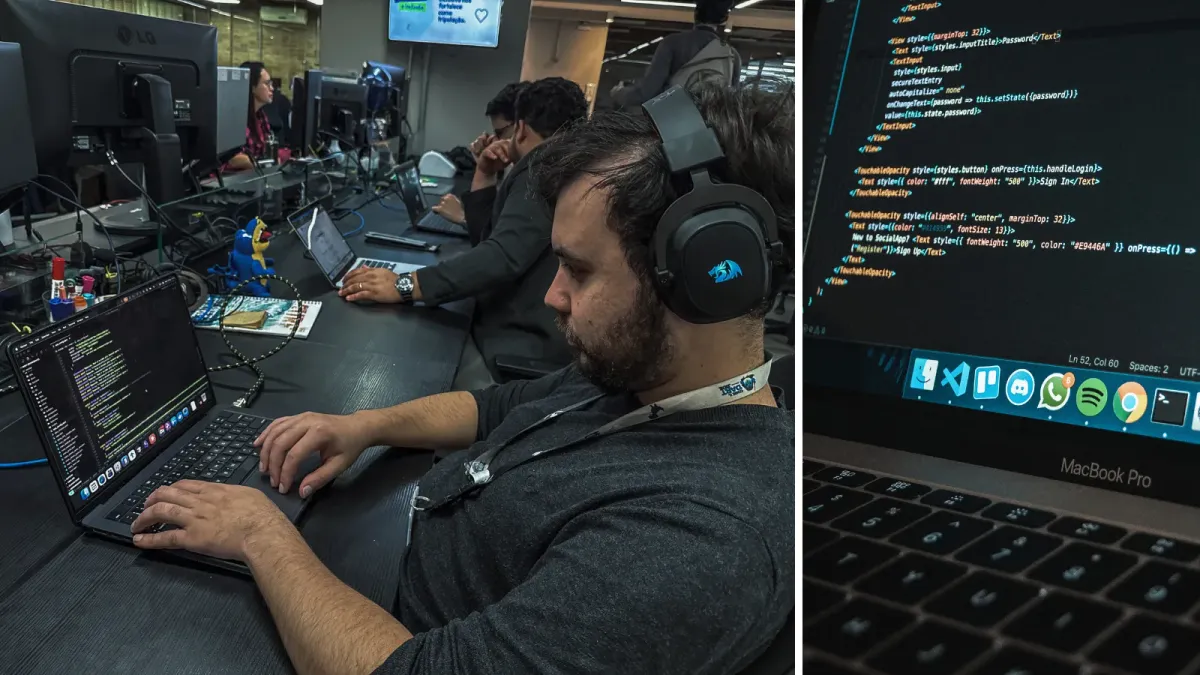
Turn planning into working technology.
04. Development
The build happens progressively, connecting interfaces, business rules, data, integrations and the tool's various components. The project is tracked through frequent validation, making it possible to identify adjustments and keep deliveries aligned with the defined objectives.
O que fazemos
- Development of systems and applications
- Building interfaces
- Implementing business rules
- Integration with services and platforms
- Technical reviews
- Progressive deliveries and validations
Principais entregas
- Developed features
- Versions for validation
- Integrations implemented
- Technology ready for QA
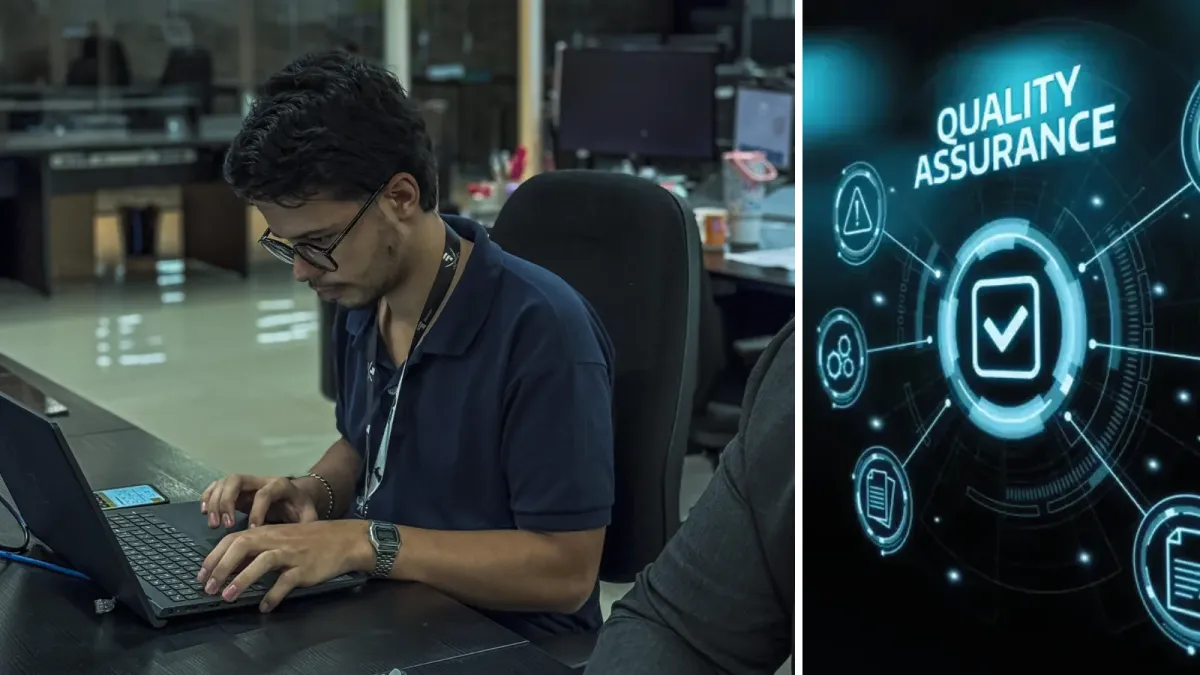
Verify before going into operation.
05. Quality and Validation
We validate how the technology works, its critical flows and its ability to respond to real-world usage scenarios. The goal is to identify issues, reduce risk and prepare the tool for a safer rollout.
O que fazemos
- Functional testing
- Flow validation
- Technical review
- Integration testing
- Performance analysis
- Client QA
Principais entregas
- Validated scenarios
- Issue logging and correction
- QA-approved version
- Preparation for rollout

The technology continues after rollout.
06. Support
After going live, we monitor stability, fix issues and support the tool's evolution. This continuity allows the technology to keep pace with changes in the business, new users, processes and the company's needs.
O que fazemos
- Preparation for rollout
- Launch and going live
- Initial monitoring
- Issue resolution
- Technical updates
- Feature evolution
Principais entregas
- Technology deployed
- Operational continuity
- Fixes and updates
- Evolution planning
The stages don't work in isolation.
Planning, experience, architecture, development, quality and support are all part of the same construction.
Decisions made at one stage affect all the others. That's why we keep the areas connected throughout the project, sharing information, validating choices and adjusting course whenever necessary.
The CUBO organizes the project without making it rigid.
The depth and sequence of the stages can vary depending on the scenario. A new project may start with planning. An existing system may first require an analysis of its architecture, experience or quality. The methodology adapts to the challenge without losing its principles.
A framework for different challenges.
The CUBO Methodology can guide complete projects or specific workstreams, whether creating new technologies or evolving existing structures.
- New systems and applications
- Internal tools
- Portals and platforms
- System modernization
- Integration between technologies
- Evolution of existing applications
- Projects run by squads
- Projects run jointly with the client's team
Technical knowledge connected to the company's reality.
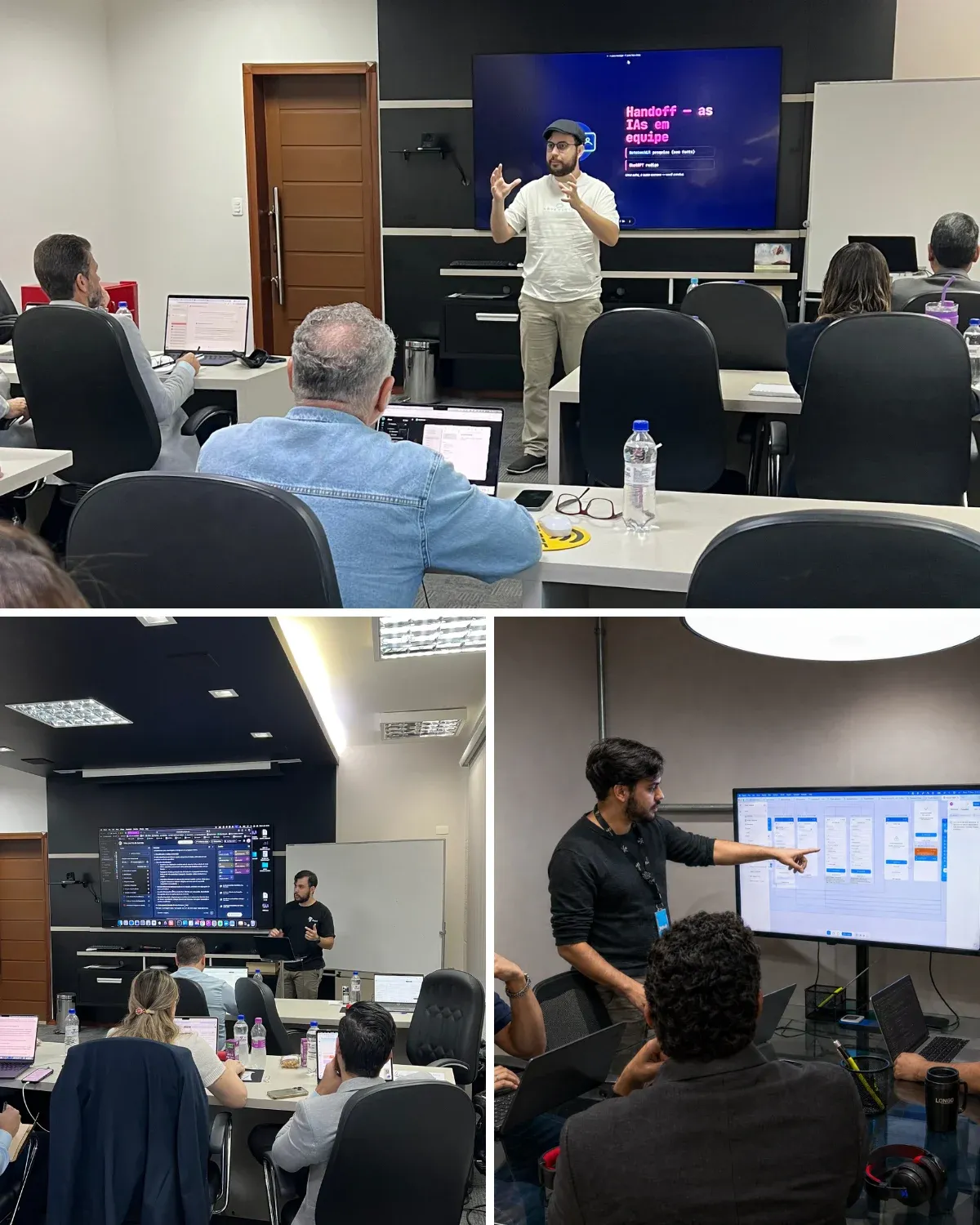
Fteam leads the process, organizes the stages and takes on the technical execution, but the most important decisions are built together with those who know the business and the operation.
Leadership, users, technical teams and the areas involved take part at the points needed to keep the technology connected to the company's real scenario.
A methodology for building with more clarity.
The CUBO Methodology connects business, people, technology and execution in a process that reduces uncertainty and prepares every project to keep evolving.